technique
Microblading vs. Ombré Powder Brows: Which Is Right for Your Skin?
Two techniques, two very different results. Here's how to choose based on your skin type, lifestyle, and what you actually want to see in the mirror.
By Sofia · May 13, 2026 · 5 min read
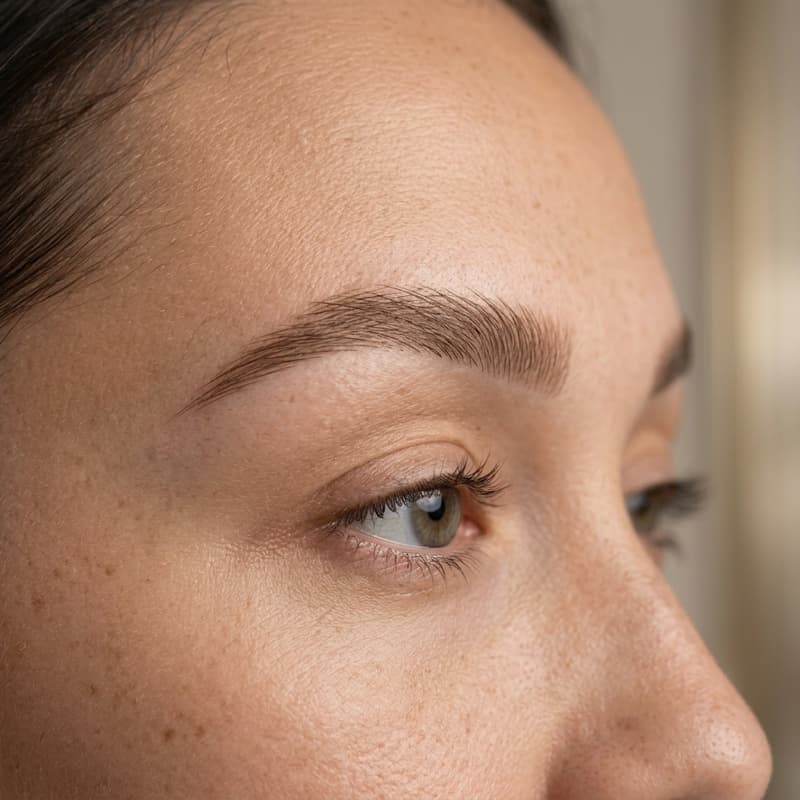
"Which one should I get?" is the first question I hear from almost every brow client. People come in having done their research — they've seen both on Instagram, they have a preference — but when I explain how the techniques actually work on different skin types, the answer often shifts. The difference between microblading and ombré powder brows isn't just aesthetic. It's about how your skin holds pigment over time, and getting that wrong costs you a touch-up you shouldn't need.
What microblading actually is
Microblading is a manual technique. I use a hand-held tool fitted with a row of micro-needles to make shallow, precise incisions in the skin and deposit pigment directly into those cuts. Each stroke is drawn individually, following the direction of your natural brow hair. Fresh off the table, the result looks remarkably like real hair — clean, defined strokes with negative space between them.
The key word is "fresh." Microblading works by sitting in the upper dermis, and that placement is intentional — shallow enough that the strokes read as individual hairs, not a block of color. But shallow also means the skin's healing process affects the result more noticeably. By week six, expect some softening of the crispest edges. That's normal, and a good microblading result at six weeks still looks like hair — just slightly more diffused.
What ombré powder brows actually are
Ombré powder brows are done with a machine — the same rotary device used in traditional tattooing, operated at low speed with a needle that punctures the skin in rapid tiny dots. Instead of strokes, the pigment is stippled into the skin to build a soft, gradient powder effect: lighter at the front of the brow, denser toward the tail.
Healed powder brows often surprise clients because the finished color is lighter than they expect. That's by design. I build with that fade in mind. At week six, a powder brow reads like you've filled in your brows with a soft-focus pencil — not drawn on, but deliberately shaped. The technique sits slightly deeper than microblading, which is one reason it holds longer on more skin types.
The real difference: skin type
This is where the decision actually gets made. Oily skin and large pores are not good candidates for microblading. The reason is physics: oily skin produces sebum that migrates into the shallow incisions over time and blurs the stroke edges. A crisp hair stroke at week six on dry skin can look like a smudged line on oily skin by month twelve. The more sebaceous your skin, the faster that blur happens.
Powder brows hold on oily skin because the stippled deposit sits deeper and doesn't rely on razor-edge crispness to look right. The technique tolerates the movement of oils without losing definition.
Dry skin and normal skin can carry microblading beautifully. The strokes stay sharp longer, and the texture of dry skin actually helps pigment grip in the incisions. If your pores are tight and your face isn't shiny by noon, microblading is a reasonable option. If you blot your T-zone daily or your pores are visible in the mirror without magnification, powder brows will give you a cleaner long-term result.
Mature skin with natural laxity falls into the powder category too. The slight looseness in skin texture makes it harder to draw a clean, consistent stroke. Powder's diffused finish reads beautifully even when the skin has some natural movement to it.
Healing comparison
Both techniques go through the same general phases — darkening, flaking, ghost stage, settled color — but the experience feels different.
Microblading's patchy phase is more visually dramatic because you're watching individual strokes disappear and reappear at different rates. Some strokes flake first, others follow a few days later. It can look uneven and alarming at week two, and that's completely normal. It's not a sign the artist made a mistake.
Powder brows fade more uniformly. Because the pigment is stippled across a field rather than concentrated in lines, the ghost stage reads as a general lightening rather than spotty gaps. Clients describe it as "fading to nothing" — which is exactly right, and exactly expected. The color that comes back by week six is the real result.
Why combination brows exist
Combination brows use both techniques in the same session: microbladed strokes toward the front and arch to add hair-stroke texture, powder shading through the body and tail for density and definition. It's not a compromise — it's a tool for a specific kind of result.
The technique makes most sense for clients who have medium skin density, want natural-looking texture at the inner brow but more structure in the body, or have skin that's in the middle ground between fully dry and genuinely oily. It also suits anyone who's seen healed microblading results and wants the hair-stroke detail but found powder-only brows too uniform.
On the right skin, combination brows give you the best characteristics of both: dimension and definition, texture and longevity.
How to actually choose
Here's a clear breakdown without the hedging:
Choose microblading if your skin is dry to normal, your pores are small, you're under 45 with reasonably firm skin texture, and you want the most natural hair-stroke result. Expect to touch up every 12–18 months.
Choose ombré powder brows if your skin is oily, your pores are large or visible, you're on retinoids or other exfoliants that accelerate cell turnover, or you have mature skin. Powder also holds longer — typically 18–30 months before a refresh. If you've had microblading before and weren't happy with how it held, powder is almost always the answer.
Choose combination brows if you're in the middle: normal-to-slightly-oily skin, you want texture but also density, or the look of powder-only feels too solid but you're not a candidate for microblading alone.
Whichever technique you choose, pigment selection matters just as much as the tool used to deliver it. I wrote about that here: Choosing the Right Pigment for Your Skin Tone.
Ready to talk through which technique suits your skin? Book a consultation.
See the full breakdown of each technique: Microblading · Ombré Powder Brows · Combination Brows.
Related services
Read next
healing
PMU Healing Timeline: What's Normal at Week 1, 3, and 6
The ghost stage is real, the patchy week-two panic is normal, and no — your brows aren't ruined. A week-by-week breakdown of what to expect after your appointment.
May 13, 2026 · 5 min read
pigment
Choosing the Right Pigment for Your Skin Tone
Undertone matters more than Fitzpatrick scale. Here's how pigment is actually chosen — and why healed color is the only color that counts.
May 13, 2026 · 4 min read
Ready when you are.
Or text Sofia at (321) 336-6326